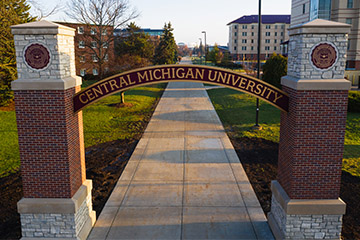
CMU reducing greenhouse gas emissions to become a greener institution

Energy efficient measures lead to 'culture of sustainability' around campus
Reducing CMU's carbon footprint
Central Michigan University’s commitment to being a more energy efficient institution has had positive results in the last four years. According to LeRoy Barnes, CMU Utilities Engineer, since 2008 CMU’s carbon footprint has been decreasing on a “rapid basis” compared to previous years thanks to conservation methods to reduce electricity consumption and conserve natural gas.
 
Barnes says CMU’s carbon footprint, the emissions that go into the atmosphere as a result of energy consumed to keep campus occupants comfortable, have been reduced by CMU’s aggressive commitment to energy conservation projects that help reduce electricity and natural gas consumption.
 
In fiscal year 2008, CMU generated 87, 439 metric tons of carbon dioxide. In fiscal year 2011, because of ongoing energy conservation projects, CMU generated 81, 198 metric tons of carbon dioxide, a reduction of 6,241 metric tons or 7.1 percent.  During the period the campus grew by 91,478 square feet or 1.6 percent.
 
While temperature control valves have been added to residence halls and other academic buildings to consume less gas, Barnes says the largest contributor to the reduction in CMU’s carbon footprint is in electricity consumption.
 
“An increasing amount of electricity, that we purchase annually, is generated by renewable energy sources,” Barnes said. “We are generating a larger percentage of the campus’ electrical requirements with natural gas, which has cleaner attributes than the bulk of the purchased electricity, which is produced by coal-fired sources.”
 
CMU also uses less electricity due to new conservation efforts, such as installing occupancy sensors and energy efficient lighting, according to Barnes. These efforts are a part of the Leadership in Energy and Environmental Design standards CMU has adopted, the standard for all renovations and construction on campus since the construction of the Education and Human Services Building.
 
Other buildings on campus constructed or renovated to LEED standards include the Events Center, Ronan Hall, the University Center and the recent renovations to Anspach Hall.
 
“It signifies we’re trying to encourage a culture of sustainability at CMU that extends beyond facilities into the students’ lives,” says Vincent Cavataio, Facilities Management communications coordinator.
 
Cavataio says seeing the different sustainability efforts in buildings on campus has helped to encourage more opportunities for students to practice sustainability on their own, like participating in the ten-week recycling competition RecycleMania.
 
“You take it home with you,” Cavataio said. “It’s the faculty and students who are using these changes to be more energy efficient. In the long run, it’s better for everyone.”
 
For more information on CMU's renovation projects, click here.
More Top Stories

Media Contacts

Danny Goodwin Jr.
989-774-1072

Related Images